That thin line cutting across your driveway near the curb? It looks minor right now. But in Ottawa, a hairline crack left untreated through even one winter can double in width, deepen toward the base, and eventually turn into a sunken section that no amount of sealcoat will fix. Catching it early — and filling it properly — is the single highest-return maintenance job you can do on an asphalt driveway.
Why Crack Filling Is the Smartest Maintenance You Can Do
Think of your driveway as a two-part system: the asphalt surface layer on top, and the compacted granular base underneath. The surface takes the visible wear — UV radiation, fuel drips, tire scrubbing, and weather. The base is what gives the whole structure its strength. As long as water stays out of the base, the driveway stays solid.
A crack is where that protection breaks down. Water finds the opening, seeps through the surface layer, and reaches the base. In summer that just softens the sub-base over time. But in an Ottawa winter, that water freezes — and frozen water expands roughly 9% in volume. That expanding ice acts like a hydraulic wedge, prying the crack wider from the inside. By spring thaw, the crack is measurably larger, the edges are fractured, and the base directly beneath has shifted slightly.
Repeat for two or three winters without intervention and you don't have a crack anymore. You have a pothole, or worse — a section of asphalt that has lost contact with its base and flexes under vehicle weight. At that point, sealing or filling won't save it. You're looking at a patch job at best, a full mill-and-repave at worst.
How Ottawa's Freeze-Thaw Cycle Accelerates the Damage
Ottawa is not a particularly cold city by Canadian standards — but it sits right on the freezing line for much of the winter. That means frequent temperature crossings around 0°C rather than sustained deep cold. Environment Canada records show Ottawa experiences 50–70 freeze-thaw cycles in a typical winter, roughly comparable to Gatineau across the river.
That back-and-forth is what does the damage. A crack that freezes solid and stays frozen all winter actually fares better than one that freezes and thaws repeatedly. Each cycle is another expansion-and-contraction event, another micro-fracture along the crack edges, and another round of water infiltration when the ice melts and the crack briefly opens before refreezing.
Neighbourhoods like Kanata, Barrhaven, Orléans, Nepean, and Gloucester all sit on similar clay-heavy soil that holds moisture well — meaning the sub-base underneath already faces extra drainage pressure. A cracked surface on top of poorly draining soil is a fast path to structural base failure.
Signs to Watch For on Your Ottawa Driveway
Not every crack is the same urgency. Here's a quick triage guide:
- Hairline cracks (under 3 mm wide): low urgency right now, but don't ignore them. They are the entry point for the freeze-thaw cycle that causes all the damage above. A sealing job in spring or fall will bridge these.
- Moderate cracks (3–10 mm wide): book crack filling before the next winter. These are wide enough to channel significant water into the base and are already working on the sub-base below.
- Wide or alligator cracks (over 10 mm, or a network of interconnected cracks): address this season. Alligator cracking — where the surface looks like reptile skin — usually signals base movement underneath, not just surface wear.
- Edge cracking along the driveway border: common in Ottawa due to frost heave and lack of lateral support at the edges. Fill these early — edge cracks widen faster than mid-surface cracks because they have less surrounding material holding them together.
- Depressions or soft spots near cracks: a sign that the base underneath has already been compromised. Don't wait — a repair now is far cheaper than letting this become a structural failure.
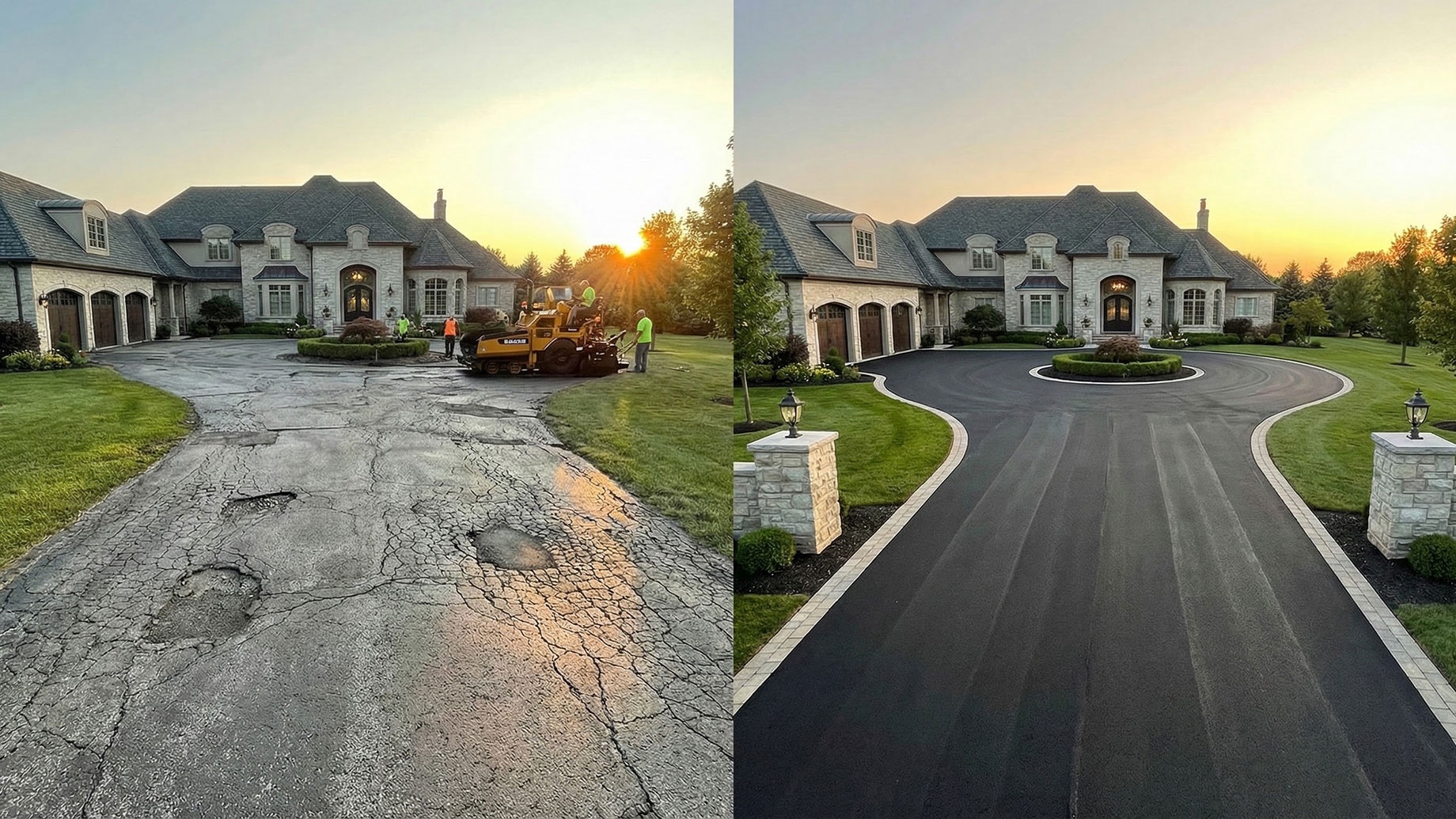
The Cost of Waiting: Small Fill Now vs. Repaving Later
This comparison is not hypothetical — it plays out on driveways across Kanata, Barrhaven, and Nepean every spring. A crack treated this season costs a small amount as part of a standard maintenance job. The same crack left through another Ottawa winter typically becomes a section that requires cutting out and hot-mix patching — a job that runs several hundred dollars depending on the size.
| Scenario | Typical cost range | What it addresses |
|---|---|---|
| Crack filling + seal (now) | Included in ~$0.70/sq ft all-in price | Surface cracks sealed; water blocked from base |
| Patching after base damage | $300–$800+ depending on area | Damaged section removed, hot-mix infill |
| Partial resurfacing | $1,500–$3,500 | Top layer milled and replaced in affected zones |
| Full driveway repaving | $4,000–$12,000+ | Complete removal and replacement |
Regular crack filling extends the useful life of a driveway by a decade or more. The numbers are not close.
DIY Crack Filling vs. Professional Repair
What's available at the hardware store
Tube crack fillers from Canadian Tire or Home Depot are asphalt-emulsion or rubberised caulk products. They work for very narrow surface cracks in reasonably good asphalt — squeezed into a clean, dry crack, they can slow water infiltration. The limitations: they don't adhere well to dirty or oxidised crack edges, they tend to dry brittle and pull away from the crack walls in cold weather, and they do nothing for cracks that have already caused sub-base movement. Most Ottawa homeowners who DIY crack-fill find themselves redoing it every spring.
What a professional crack filling job actually involves
The difference is preparation and product quality. Before any filler touches a crack, it needs to be:
- Blown clean. Debris, loose aggregate, and standing moisture inside the crack will prevent any filler from bonding properly. A professional crew blows cracks clean before filling — a step almost every DIYer skips.
- Filled with the right compound for the crack width. Hairline cracks get filled by the sealcoat itself. Moderate cracks get a commercial rubberised filler that stays flexible through Ottawa temperature swings — from –25°C in January to +35°C in July. Wide or structural cracks get hot-rubber treatment: heated, self-levelling compound that bonds to both crack faces and moves with the asphalt rather than cracking itself.
- Sealed over once cured. Crack filler alone leaves the repair visible and slightly exposed. Sealcoat applied over it binds the repair into the surrounding surface and creates a uniform, waterproof layer across the whole driveway.
How Crack Filling Fits Into Drivewave's All-In Price
We don't charge separately for crack filling. It's included in every job — because doing crack filling right before sealing is what makes the seal last. Pricing is simple: roughly $0.70 per square foot, with a $200 minimum for smaller driveways and a custom quote for anything over 1,000 sq ft. That one price covers everything: pressure washing, oil-stain treatment, crack filling (rubberised or hot-rubber depending on what we find), and the sealcoat.
There's no menu of add-ons and no surprise upcharges on job day. We assess every crack on your driveway and use the appropriate treatment — you don't need to tell us which type. For large driveways or unusual situations, book a free on-site quote and we'll measure and give you a firm number before any work starts.
Use the instant estimate tool to get a ballpark based on your driveway size, or call us directly at (438) 763-7532 — we respond the same business day.
When to Book in Ottawa
Crack filling and sealing both require temperatures above 10°C and dry weather for the curing window. In Ottawa that window runs from roughly mid-May through late September. A few things to keep in mind:
- Spring (May–June) is ideal for catching damage that developed over winter before another season of UV and vehicle wear compounds it.
- Summer (July–August) works well but our schedule fills quickly — book at least two weeks ahead if possible.
- Early September is still a strong choice. Getting the driveway sealed and crack-filled before Thanksgiving gives it time to fully cure before the first hard frost.
- October onward: don't risk it. Ottawa nights drop below cure temperature by mid-October most years. A seal that hasn't cured going into freeze season can trap moisture rather than blocking it.
Most jobs in the Ottawa area — Kanata, Barrhaven, Orléans, Nepean, Gloucester — are completed in a single visit. We arrive, prep, fill, and seal in one continuous job, and you can walk on it by evening.