Every spring, Gatineau homeowners step outside and see what five months of freeze-thaw has done to their driveway. And every September, they realise they meant to seal it before winter. If you've been going back and forth on whether to book a driveway sealing in Gatineau this spring or wait until fall, this article gives you a straight answer — based on our local climate, the chemistry of sealcoat, and several years of doing this work in the National Capital Region.
The Non-Negotiable: Temperature and Dry Weather
Before the spring-versus-fall debate even matters, there's one rule that overrides everything else: sealcoat needs temperatures above 10°C to cure properly, and it needs dry weather for at least 24–48 hours after application.
Apply sealer when it's too cold, and the emulsion won't bind correctly. The coating stays soft, tracks under tyres, and peels within weeks. Apply it before a rainstorm, and the water washes the product off before it sets — a wasted job and a wasted day.
In Gatineau, those two conditions narrow your window considerably. We're reliably above 10°C from late May through September. October is a gamble — some years it holds, most years it doesn't. That gives you roughly four months of viable sealing season, split between spring and fall.
The Case for Spring Sealing
Address winter damage before it deepens
Gatineau sees 40–60 freeze-thaw cycles in a typical winter. Each cycle forces water in and out of any crack or pore in the asphalt, widening damage from the inside. By May, your driveway has accumulated months of that stress. Sealing in late spring — once nighttime temperatures are reliably above 10°C — stops the bleeding early. New cracks are small and cheap to fill; give them one more winter and they become expensive problems.
Start the season looking sharp
A freshly sealed driveway in June means you enjoy the result all summer: clean black finish, water-repellent surface, no loose aggregate tracking into the garage. Fall sealing gives you the same protection going into winter, but you don't get much visual payoff before the snow covers it again.
The drawbacks of spring
Late April and early May in Gatineau can be wet and unpredictable. We typically won't book spring jobs until we have a stable forecast window. The ground can also stay cold longer than the air suggests — we check surface temperature, not just air temperature, before starting any job. The practical spring sealing window in Gatineau runs from about mid-May to late June, and crews fill up fast.
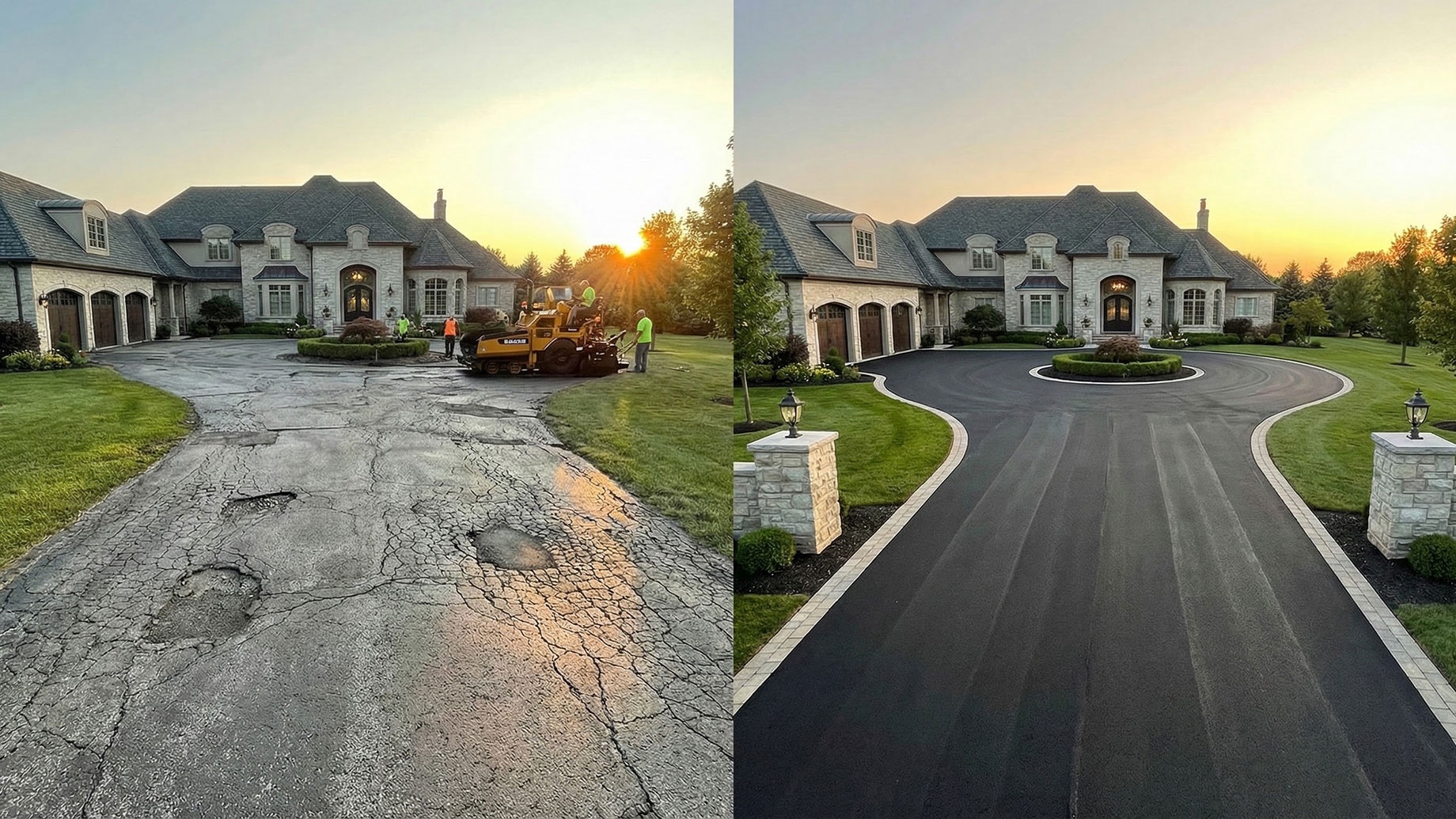
The Case for Fall Sealing
Asphalt is in its best condition after summer
This is the part most homeowners don't know: asphalt that has been warmed all summer is actually in peak condition to absorb sealcoat. The binder is pliable, small surface cracks have relaxed in the heat, and the surface is dry and clean from months without road salt. From a purely technical standpoint, late August through mid-September is the optimal time to seal in Gatineau's climate.
Protect ahead of your highest-risk season
Sealing just before the freeze-thaw cycle begins is the best defensive move you can make. You're waterproofing the surface right before the conditions that most damage unsealed asphalt. A fall seal that cures properly in September means your driveway is armoured going into October, November, and the long Quebec winter.
The drawbacks of fall
The window is short and unforgiving. In Gatineau, reliable daytime temperatures above 10°C start disappearing by mid-October — and nighttime lows drop below the threshold even earlier. A job that should be done in the first week of October can easily get pushed by rain and cold snaps into conditions where we'd recommend waiting until spring instead. Book your fall sealing no later than mid-August to guarantee a spot before the season closes.
- Ideal fall window: mid-August through mid-September. Warm days, stable nights, low rain probability.
- Acceptable fall window: late September. Still viable but requires a reliable 48-hour forecast.
- Risky in Gatineau: anything in October. Surface temperatures can drop below 10°C overnight even when daytime highs feel warm.
Spring vs. Fall: Side by Side
| Factor | Spring (May–June) | Fall (Aug–Sept) |
|---|---|---|
| Asphalt condition | Post-winter stress; cracks filled as part of job | Peak — warmed all summer, fully pliable |
| Timing benefit | Stops winter damage from widening early | Armours driveway right before freeze season |
| Visual reward | Enjoy the finish all summer | Finish is covered by snow within weeks |
| Weather risk | Wet May; surface may still be cold | Short window; October too risky |
| Booking pressure | Fills by early June | Fills by late August |
| Technical verdict | Excellent | Marginally better for sealcoat bonding |
The Real Problem: Waiting Too Long in Either Season
Here's the honest truth from years of driveway sealing in Gatineau: the homeowners who end up with the worst driveway damage aren't the ones who chose the wrong season. They're the ones who kept meaning to book and never did.
In both spring and fall, our schedule fills 1–2 weeks out once temperatures stabilise. That means if you call in the third week of September hoping for a late-season slot, we may be fully booked. Same story in June — by the time the holiday weekend hits, spring bookings are largely done.
How Drivewave Does It — Everything Included, Done in a Day
Whether you book in spring or fall, the job is identical. We price driveway sealing in Gatineau at roughly $0.70 per square foot — everything included. That means pressure washing, crack filling, oil stain treatment, and sealcoat in a single visit. No per-service menu, no surprise add-ons. Minimum $200; custom quote for driveways over 1,000 sq ft.
Before we book anything, we offer a free on-site quote. We measure, assess the surface condition, identify any cracks or damage, and give you a firm price. Most residential jobs are done the same day we start. You're on foot by evening and back in your car within 24–48 hours.
- Pressure wash — clears road salt, biological growth, and loose aggregate that would prevent bonding.
- Oil and stain treatment — bond-breakers dealt with before the first drop of sealer goes down.
- Crack filling — rubberised filler for moderate cracks; hot-rubber compound for deeper or wider ones. All included.
- Commercial-grade sealcoat — applied at the correct spread rate for an even finish that actually lasts 2–3 years.
Use our instant estimate tool to get a ballpark based on your driveway size, or book a free on-site quote and we'll give you an exact number with no obligation.